.
In Québec, winter is part of who we are. From the first snowflakes, the snowy landscapes and frozen lakes turn into playgrounds — places of adventure and discovery. But behind this winter beauty sometimes lie fragile ice surfaces, too weak to safely support our activities. Every year, lives are changed because people chose to travel across uncertain ice, outside organized and supervised areas.
..
That’s why we’re launching this ice safety campaign, made possible through the support of the Programme Intégrité Sécurité Québec. Our goal: to give you the essential knowledge to enjoy winter to the fullest — safely.
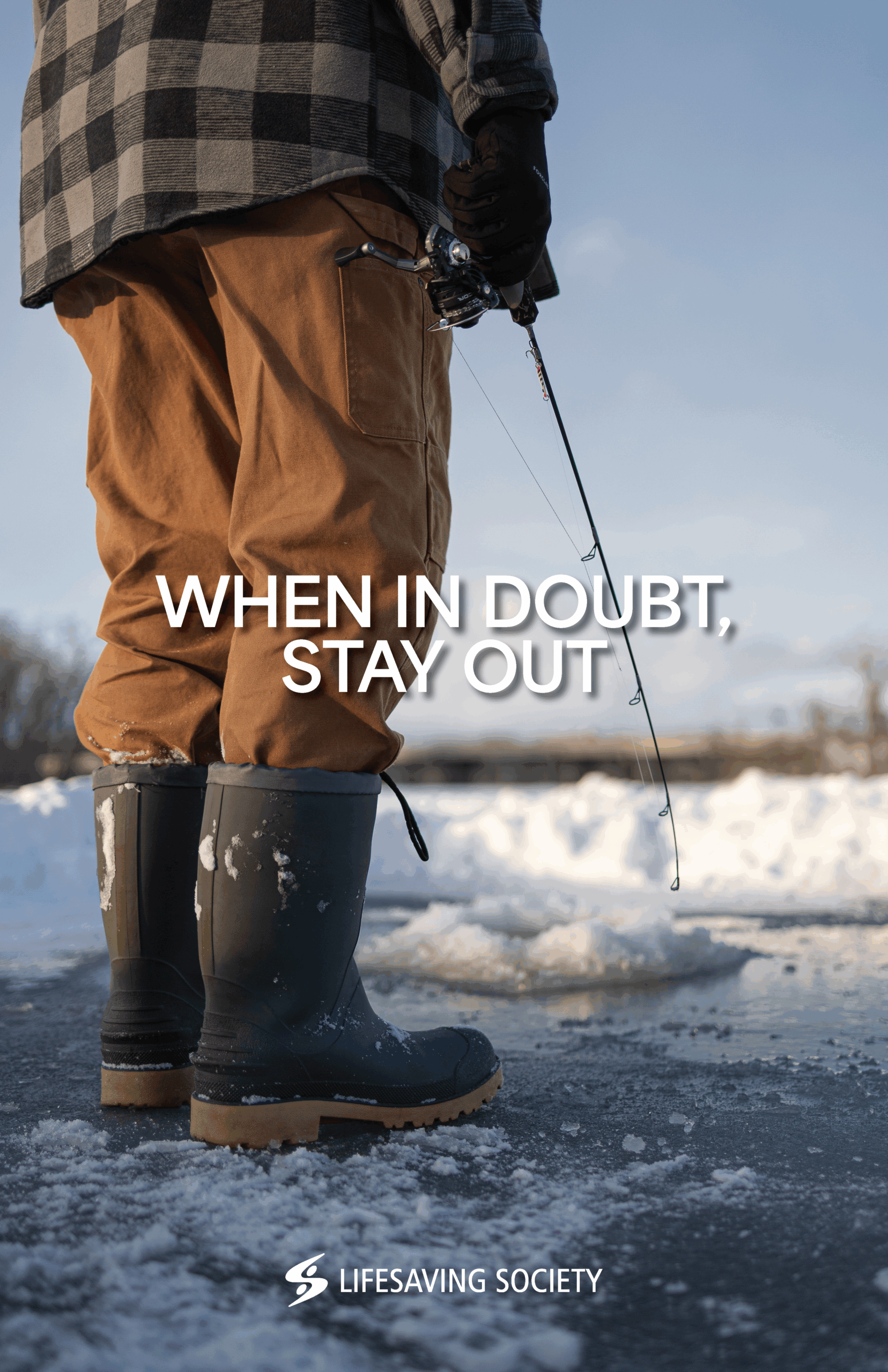
Remember this simple yet vital advice, which we’ve chosen as our slogan: “When in doubt, stay out”.
A short phrase that could prevent a fatal mistake.
Below, you’ll find our safety tips based on the activity you plan to do. Take the time to learn and assess your surroundings before heading out on the ice. Together, let’s make sure winter remains a playground, not a danger zone.
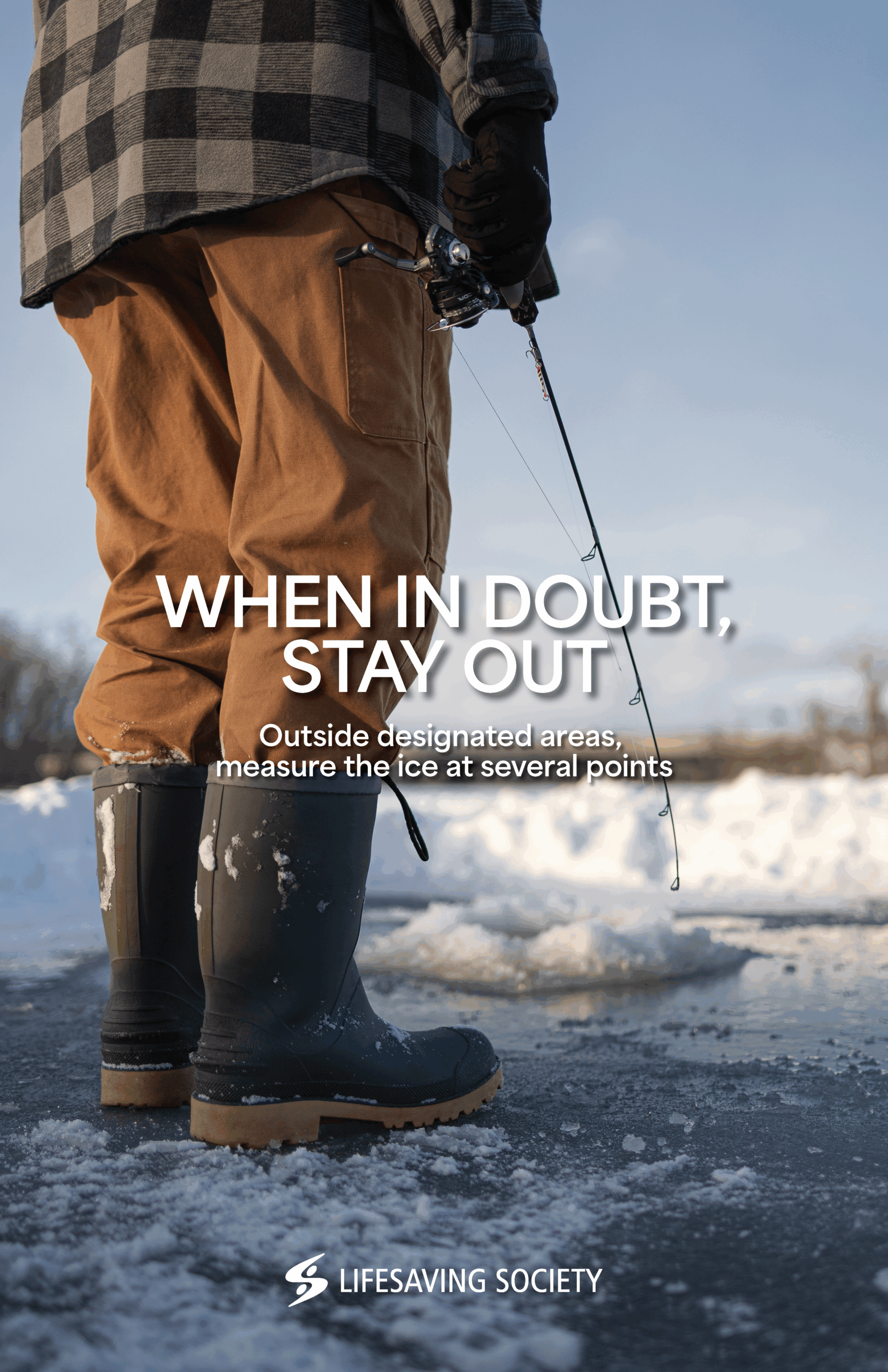
ICE FISHING
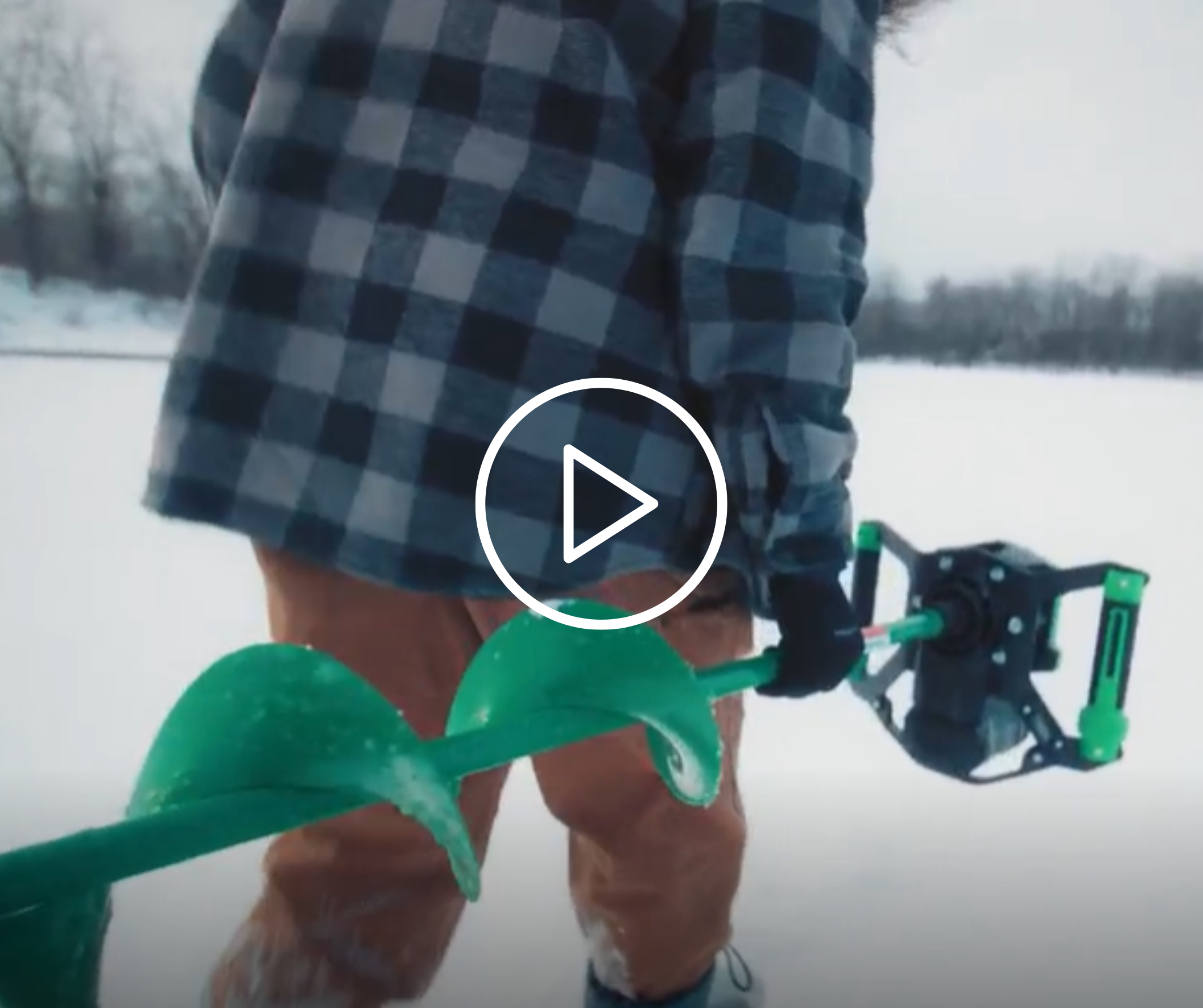
Outside organized areas, assess your surroundings : Before venturing onto a body of water, it’s essential to know its characteristics and the factors that affect ice thickness. Currents, water depth, wind, snow on the surface, and temperature changes can all impact its strength. If the ice is wet or cracked, stay off it.
Measure the ice in several spots : Use a drill, saw, or auger along with a measuring tape to check the ice thickness. This is the best way to ensure your safety. Clear, new ice is the strongest. If it’s gray or white, it has thawed and refrozen several times, making it weaker. It must then be even thicker to be safe.
Never go alone : Having a companion can make all the difference — they can help or call for assistance in an emergency.
.
.
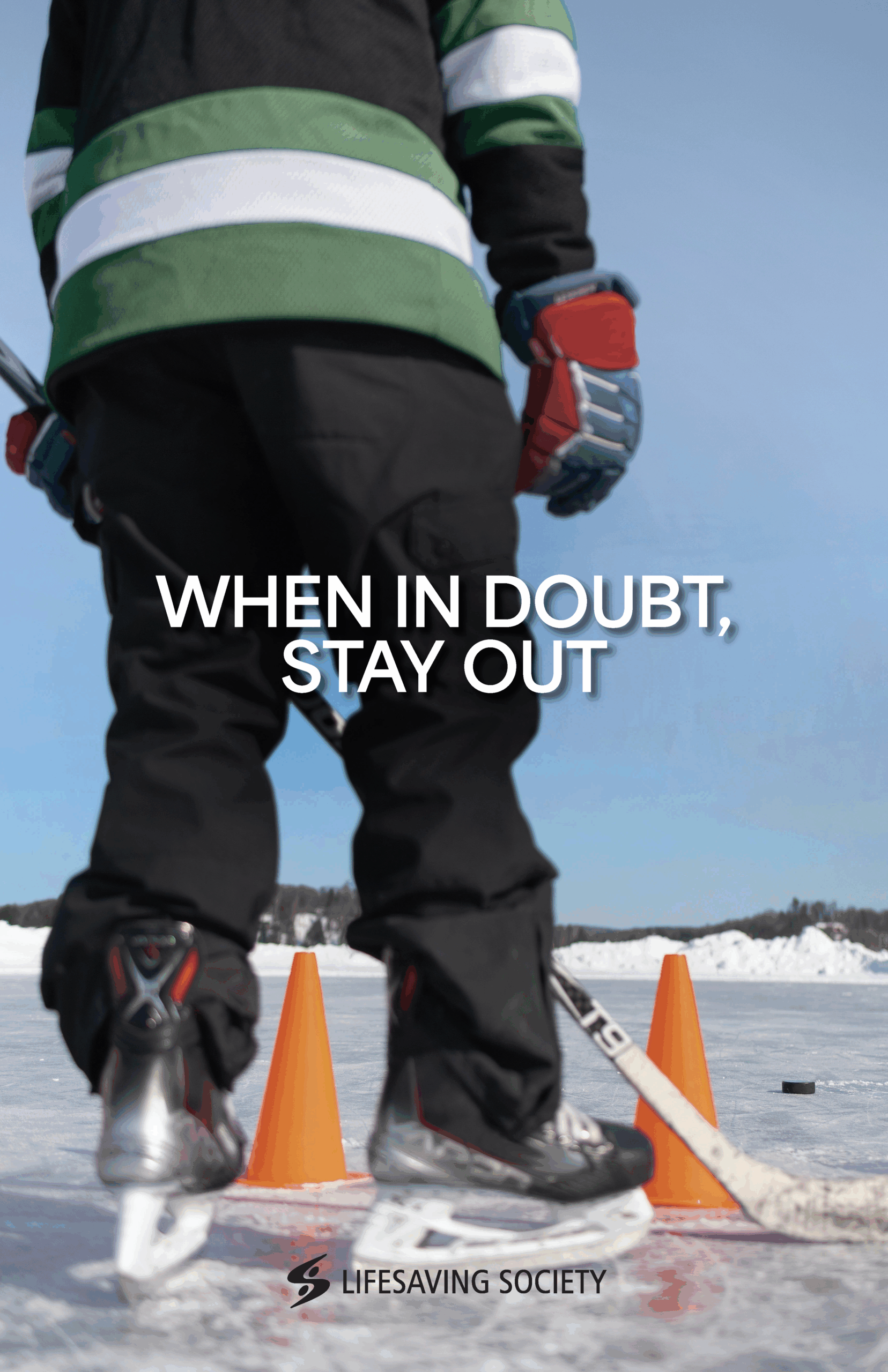
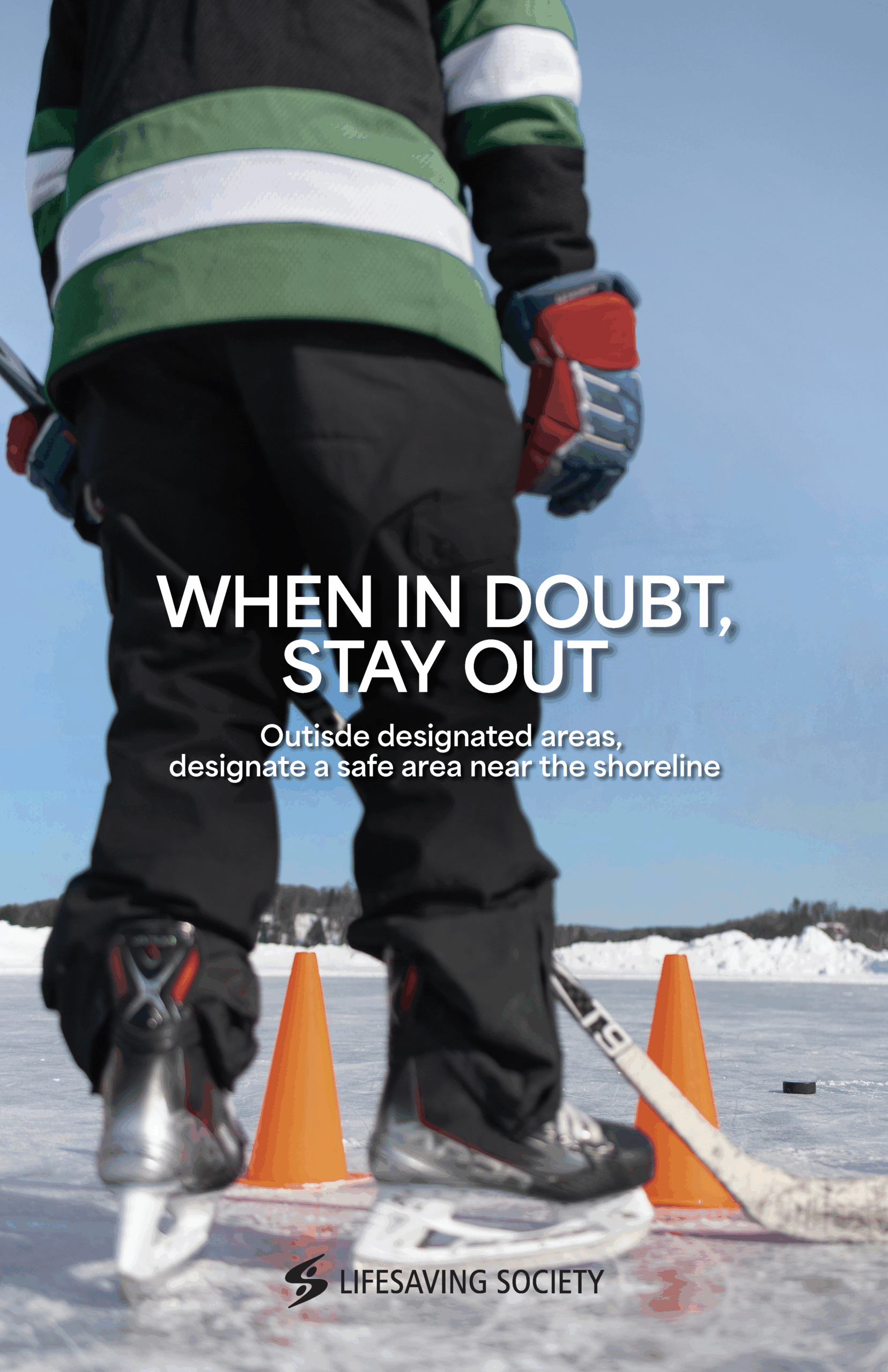
HOCKEY AND SKATING
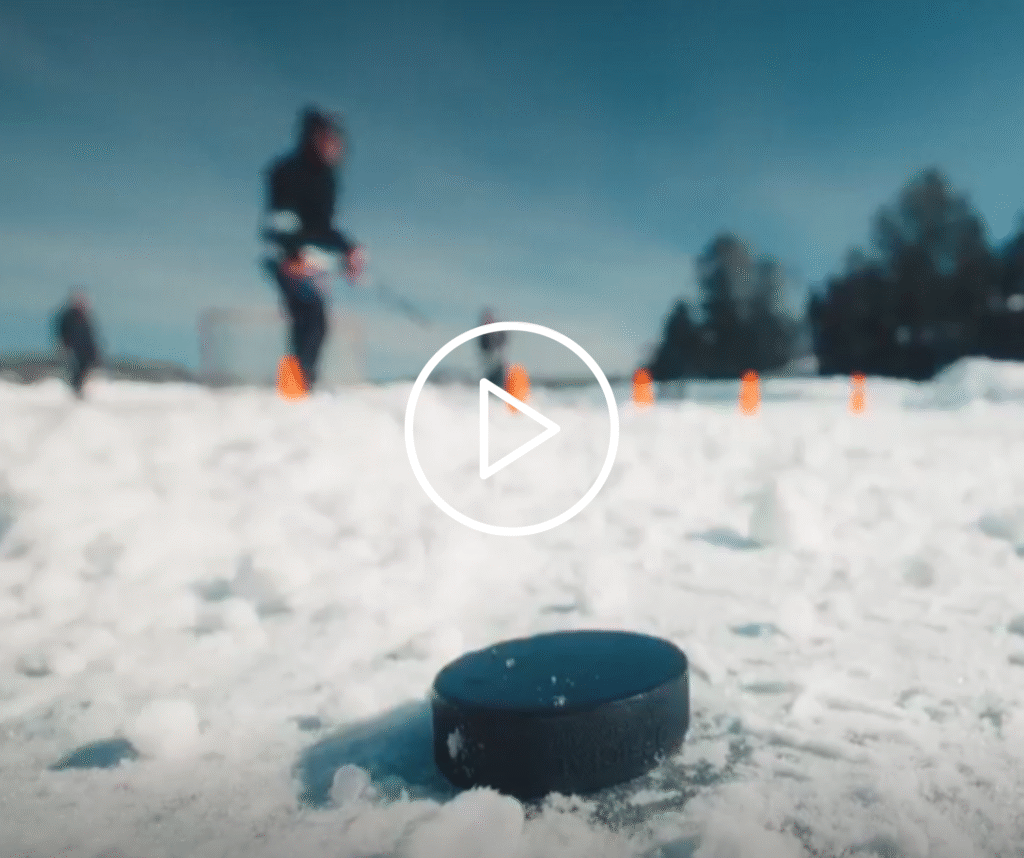
Designate a safe area near the shore : Ice forms earlier and more solidly near the shoreline, where the water is shallower. Mark off a safe zone by checking the ice thickness in multiple spots, and stay within the boundaries. Staying near the shore also allows for quicker help or evacuation if needed.
Check the ice thickness : To support one person, you need at least 10 cm (4 inches) of clear, new ice. If multiple people are skating nearby, thicker ice is required.
Never go alone : Having someone with you can make all the difference if you fall through or have an accident.
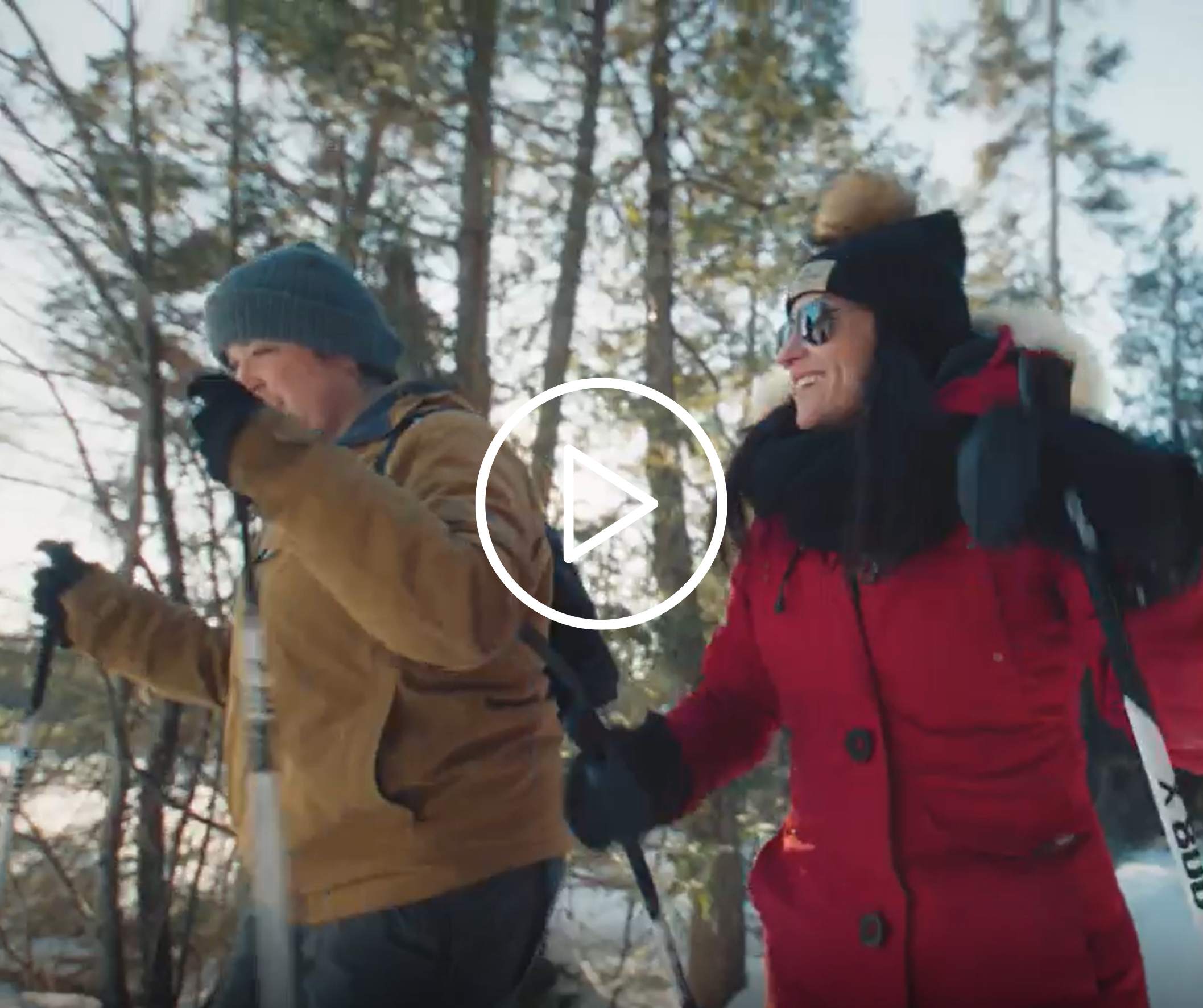
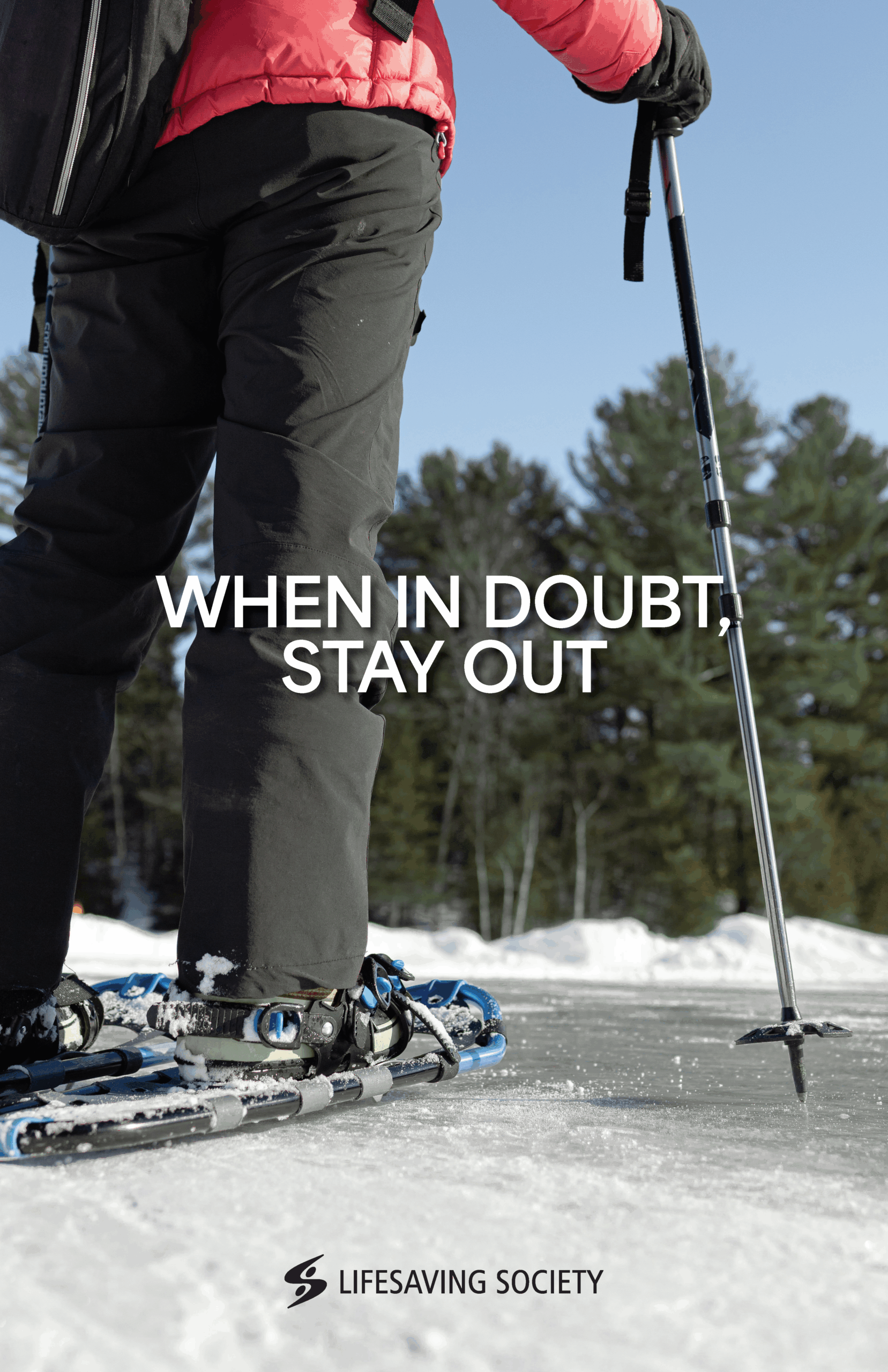
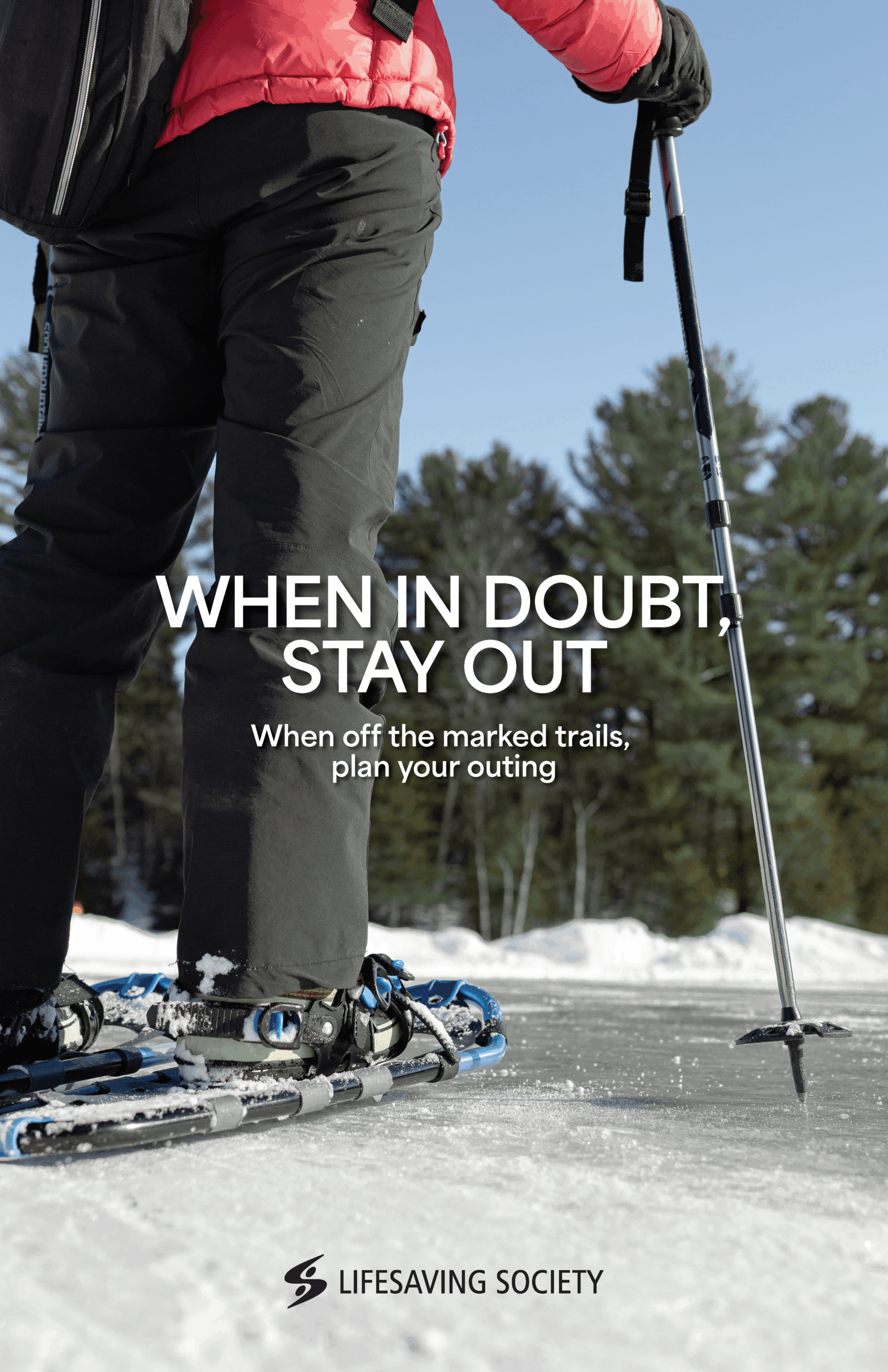
SNOWSHOEING AND
CROSS-COUNTRY SKIING
Never go alone : Doing your activity in pairs or in a group ensures that if something goes wrong, someone can act right away.
Plan your trip : Before heading out, assess your skills and energy level. Plan a realistic route and stick to it. Check the weather forecast and inform someone of your itinerary and expected return time. Bring the right gear: warm clothing, safety equipment, water, snacks, and means of communication such as a cellphone, whistle, visible clothing, or a lighter to start a fire if needed.
Check the ice thickness : Never assume a frozen lake is safe — that mistake can be fatal. Always check the ice thickness before stepping on it. Ask someone trustworthy, like a local bait shop owner or lodge operator, about current ice conditions. If you can’t get reliable information, stay on solid ground.
.
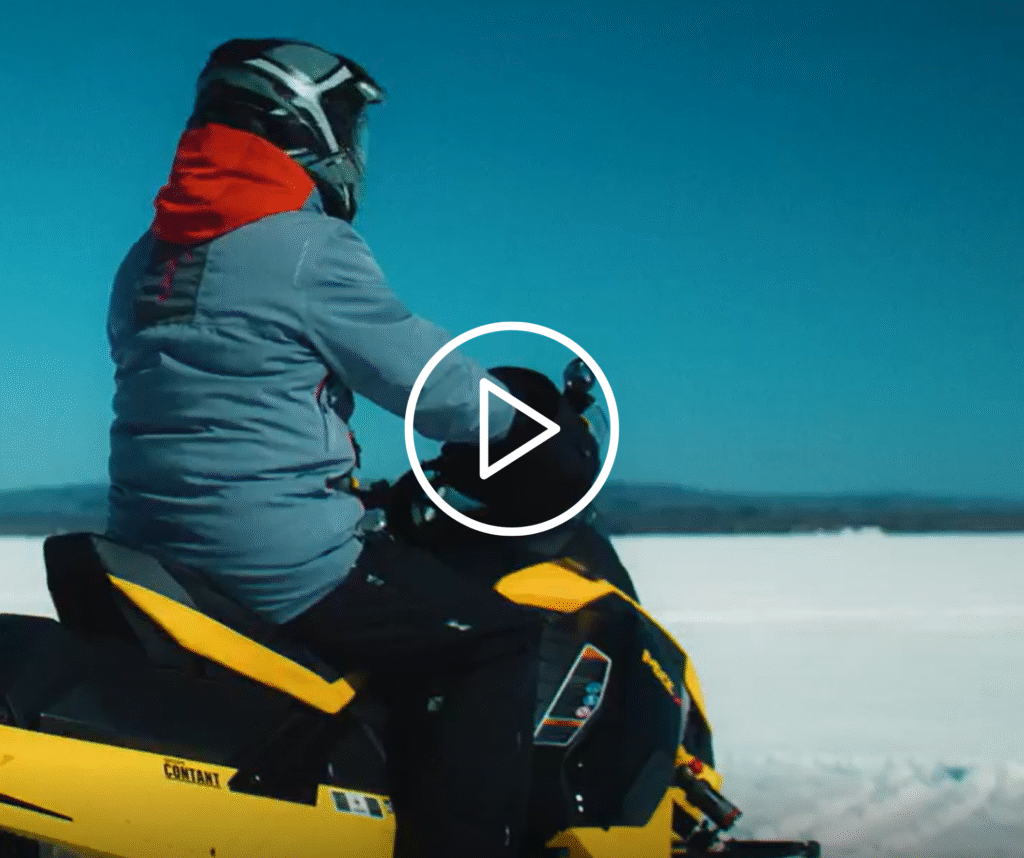
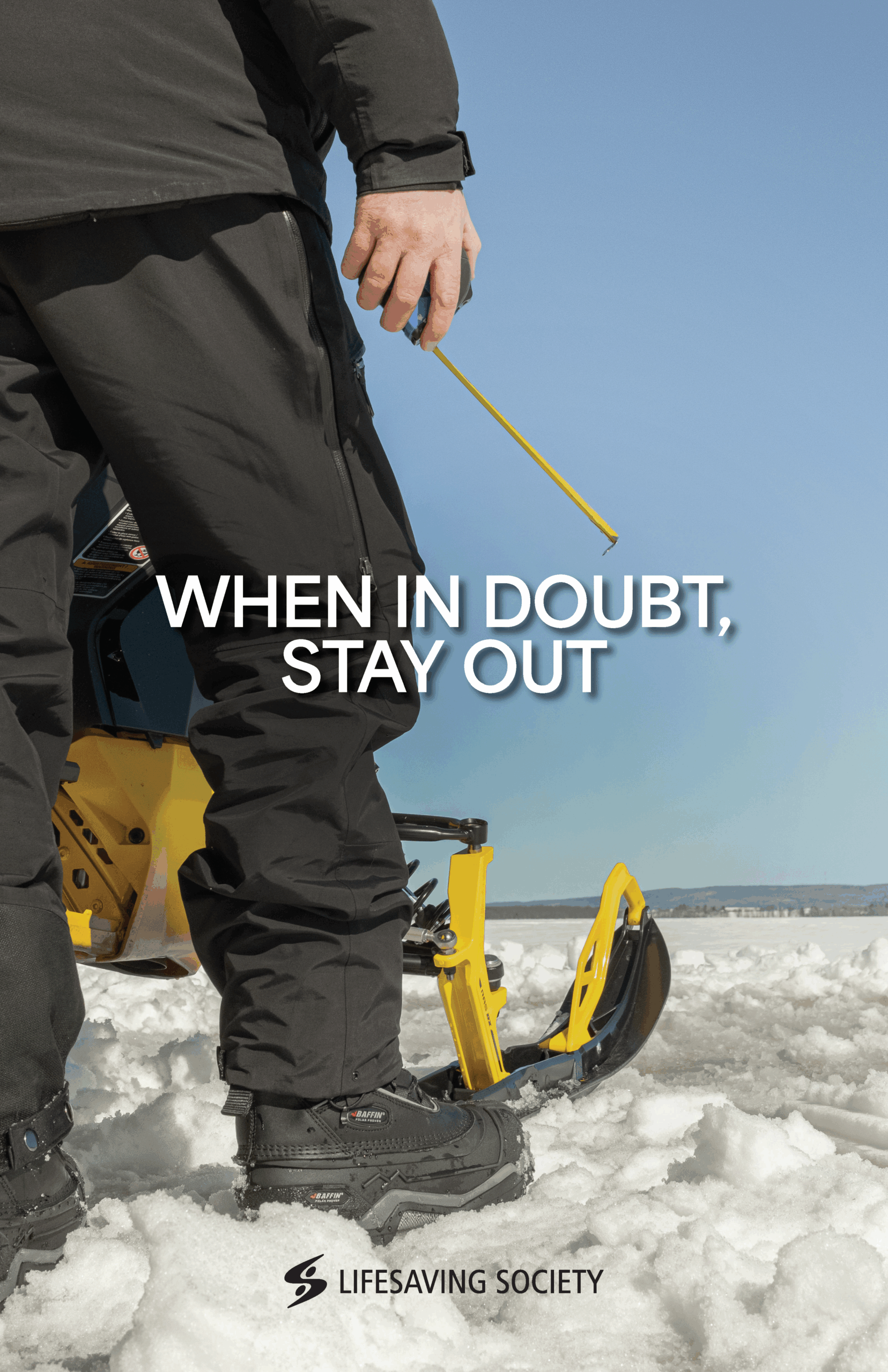
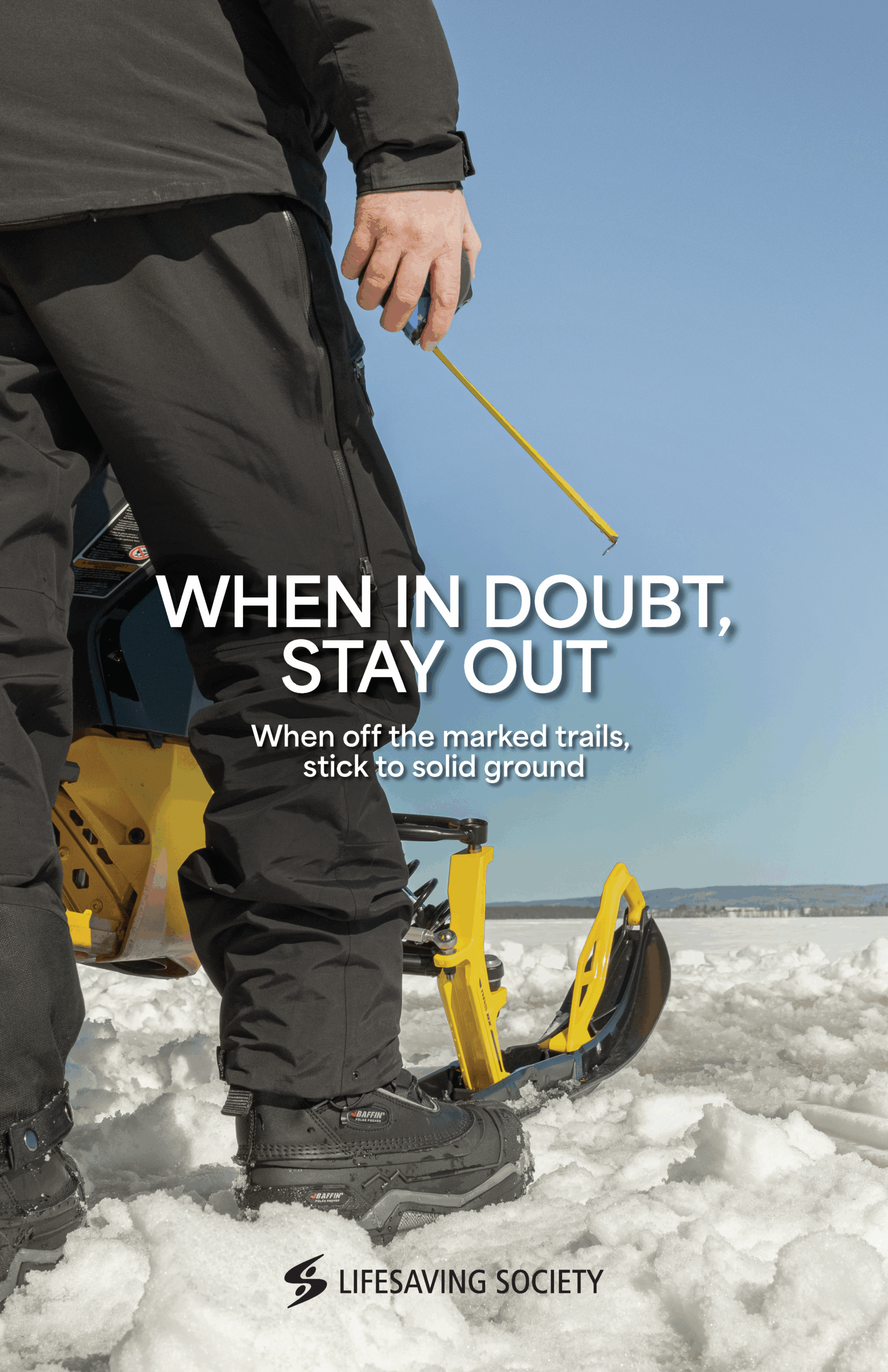
SNOWMOBILE AND ATVs
Outside marked trails, stay on solid ground : Cutting across a lake might seem like a shortcut, but it can be deadly. Many clubs across Québec maintain trails for their members. When a trail crosses a body of water and is open, it means the ice thickness has been checked and deemed safe.
Plan your route : Apps like iMotoneige and iQuad let you check trail conditions and plan your ride. Before you leave, check the weather and tell someone your destination and expected return time. The Fédération des clubs de motoneigistes du Québec and the Fédération Québécoise des Clubs Quads both list recommended equipment on their websites to help you prepare, face the cold, and handle unexpected situations.
Never go alone : Traveling with at least one other off-road vehicle reduces risks and increases your chances of effective action in an emergency.
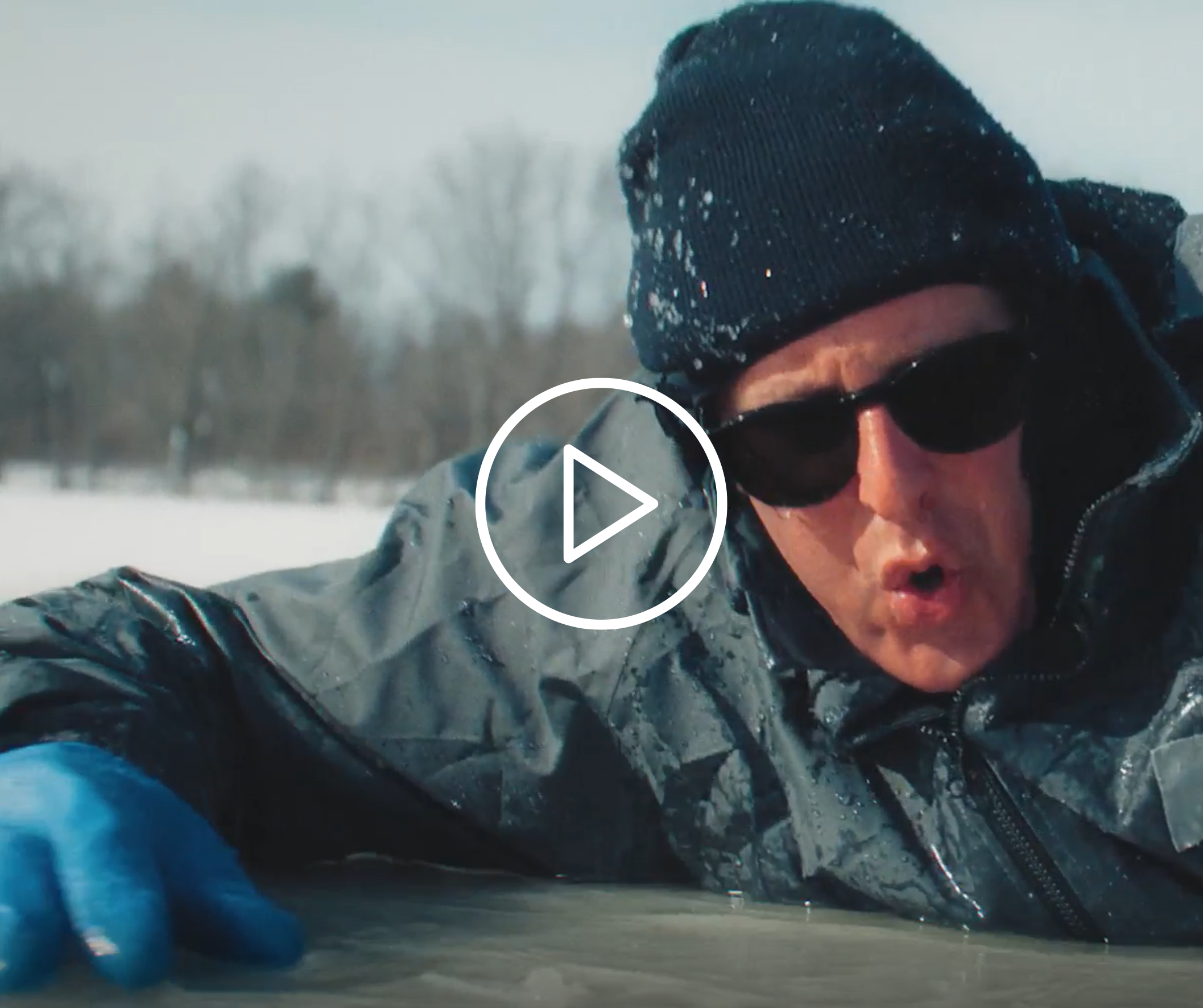
SELF-RESCUE | 1-10-1 RULE
1 Minute — Regain control of your breathing : Stay calm and focus on breathing. The shock of cold water can cause hyperventilation, making you inhale water. You have about one minute to control your breathing before you can think clearly about what to do next.
10 Minutes — Take action : You have roughly ten minutes to make meaningful movements before the cold limits your strength. Try to get out of the water by moving toward the solid ice you came from. Use your arms, kick hard, and use sharp objects to grip the ice. Once on the surface, crawl or roll away while keeping your body low until you reach solid ground.
1 Hour — Prevent hypothermia : You have about an hour before hypothermia becomes critical. Get out of the wind, wring out or change wet clothes, and find or make shelter. If you have a lighter, start a fire to warm up. Stay put until you’re warm and dry or until help arrives.
Discover the self-rescue technique in detail (french only).
.
Downloadable printable posters
.
Winter in Québec is all about pride, fun, and outdoor adventure. But to keep the season joyful, we must recognize risks and make smart choices. Before stepping onto the ice, take a moment to think, measure, and learn. Those few seconds could save a life — maybe your own or that of someone you love.
Remember: “When in doubt, stay out”.
Together, let’s make sure every day on the ice ends with happy memories — not preventable tragedies.
.